Astigmatism glasses are eyeglasses made with prescription values that correct astigmatism. If your prescription includes CYL and Axis, those numbers tell the lens lab how much correction is needed and where that correction should be placed.
This guide explains what astigmatism means, how toric lens language fits in, and what to check before ordering eyeglasses for astigmatism online.
What is astigmatism?
Astigmatism is a common focusing issue caused by the eye having different curves in different directions. Instead of light focusing evenly, it may focus unevenly, which can make vision look blurry, stretched, or less sharp at certain distances.
Only an eye-care professional can diagnose astigmatism and write the prescription values needed for glasses. If you already have a prescription, look for the CYL and Axis fields.
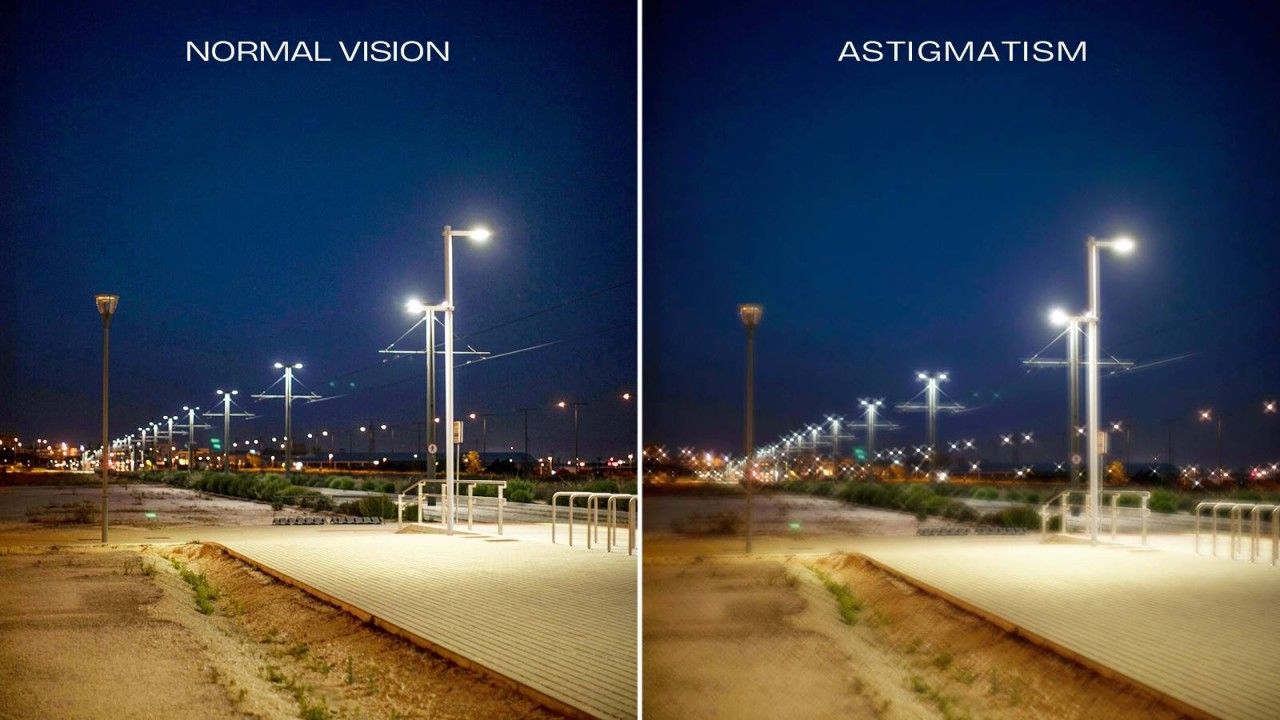
How astigmatism appears on an eyeglass prescription
| Prescription field | What it means | Ordering note |
|---|---|---|
| SPH | Sphere power for nearsightedness or farsightedness | Enter the plus or minus sign exactly as written |
| CYL | Cylinder power for astigmatism | May be blank, zero, plus, or minus |
| Axis | Direction of the astigmatism correction | Usually 1 to 180 and needed when CYL is present |
| PD | Pupillary distance for lens centering | Use the single or dual PD value requested at checkout |
CYL and Axis work as a pair. If your prescription has a CYL value, the Axis value should also be entered. If you are unsure whether a field is blank, zero, or not needed, confirm with the office that issued the prescription.
What are toric lenses?
Toric lens is a term often used for lenses designed to correct astigmatism. In contact lenses, toric design and lens rotation are major topics. In eyeglasses, the customer-facing task is simpler: make sure the prescription values are accurate and the frame can support the lens type you need.
If you are comparing astigmatism glasses online, start with a current prescription, then choose a frame that is not unnecessarily oversized. Very large frames can make stronger prescriptions feel heavier or show more lens edge.
Choosing frames for astigmatism glasses
Most common frame shapes can work with astigmatism prescriptions. The better starting point is fit: frame width, bridge comfort, lens height, and how centered your pupils are in the frame.
- For a clean everyday choice, compare rectangle glasses and square glasses.
- For a softer look, compare round glasses and oval glasses.
- For a lighter feel, compare lightweight glasses.
- For stronger prescriptions, review the high prescription frame guide before choosing a very large or rimless frame.
Online ordering checklist for astigmatism
- Use a current eyeglass prescription, not a contact lens prescription.
- Enter SPH, CYL, and Axis for each eye exactly as written.
- Keep plus and minus signs unchanged.
- Enter PD carefully, including dual PD if your prescription or provider gives separate values.
- Choose a frame size close to a pair that already fits well.
- Contact customer support before ordering if any prescription field is unclear.
FAQ
Can glasses correct astigmatism?
Prescription glasses can correct many astigmatism prescriptions when the CYL and Axis values are entered correctly and the lenses are made to the prescription.
Are toric lenses only for contacts?
Toric is most often discussed with contact lenses, but the idea relates to astigmatism correction. For eyeglasses, focus on the written prescription values and lens compatibility.
Do astigmatism glasses need special frames?
Not always. Many frame shapes can work. Very large, very shallow, rimless, or unusual frames may need more careful review for stronger prescriptions.
What happens if Axis is entered wrong?
An incorrect Axis value can make the lenses feel blurry or uncomfortable. Copy the Axis exactly as written and confirm unclear prescriptions with an eye-care professional.