Small eyewear accessories can change how a pair of glasses feels. If your frames slide down, leave marks, sit on your cheeks, or feel uneven, the issue may be the bridge, nose pads, temple tips, or a loose screw rather than the frame style itself.
This guide explains the most common glasses nose pads and accessories, including spectacle chains, eyeglass chains, temple arms, hinges, and small replacement parts, plus when to replace them and how to choose parts that match your frame.
Parts of glasses and eyeglass frames
If you are searching for parts of glasses, parts of eyeglasses, parts of eyeglass frame, names of glasses parts, eyeglass parts diagram, glasses parts diagram, anatomy of spectacles, components of eyeglasses, or eyeglass frame parts, these are the main names to know before buying accessories or replacement parts.
| Part name | What it does | Common issue |
|---|---|---|
| Frame front or rims | Holds the lenses in place | Cracks, warping, or loose lenses |
| Bridge | Connects the lenses and rests above the nose | Pinching, sliding, or poor nose fit |
| Nose pads | Support the frame on each side of the nose | Yellowing, pressure marks, or slipping |
| Pad arms | Hold adjustable nose pads on many metal frames | Bending or uneven frame height |
| Hinges | Connect the frame front to the temples | Loose screws or stiff movement |
| Temple arms | Extend back toward the ears | Loose fit or pressure behind the ears |
| Temple tips | Soft end pieces behind the ears | Discomfort, slipping, or worn coating |
| Screws | Secure hinges, rims, and nose pads | Loose frame or missing nose-pad screw |
| Spectacle chains | Keep glasses nearby when taking them on and off | Can pull on delicate temples if too heavy |
Searches like glasses arms, temple arms, arms of glasses, glasses without arms, or eyeglasses without arms usually refer to the side pieces that hold the frame behind your ears. Standard prescription eyewear needs temples for daily stability. If you want a minimal look, compare rimless or semi-rimless frames instead of looking for a pair with no side support.
What Are Glasses Nose Pads?
Nose pads are the small contact points that rest on each side of your nose. They support part of the frame weight and help decide whether glasses sit high enough, stay centered, and avoid cheek contact.
Metal glasses and many adjustable frames use separate nose pads attached to small pad arms. Many acetate or plastic frames use a fixed bridge instead. Some fixed-bridge frames can still be improved with adhesive stick-on pads, but they cannot always be adjusted as precisely as frames with pad arms.
Types of Nose Pads
| Type | Best for | Notes |
|---|---|---|
| Silicone nose pads | Grip, softness, daily comfort | Often best for frames that slide or leave marks |
| Hard plastic nose pads | Durability and a firmer feel | May create more pressure during long wear |
| Air cushion nose pads | Heavy frames or sensitive bridges | Spread pressure more softly |
| Adhesive stick-on pads | Plastic or acetate frames without pad arms | Useful for small fit adjustments, but not a full repair |
When Adjustable Nose Pads Matter
Adjustable nose pads are especially helpful for low bridge fit, flatter bridge shapes, uneven bridge height, or frames that slide forward. They allow the frame to be lifted slightly, centered more carefully, and held away from the cheeks.
If you often search for glasses with nose pads, low bridge glasses, or glasses that do not slide down, start with frames that have visible pad arms or a bridge design that can be adjusted by an optician.
How to Choose Replacement Nose Pads
- Check the attachment style: screw-in, push-in, clip-on, or adhesive.
- Measure the size: common sizes include 12 mm, 14 mm, and 16 mm.
- Match the material: silicone for comfort and grip, firmer plastic for a more rigid feel.
- Replace both sides together: mixed old and new pads can make the frame sit unevenly.
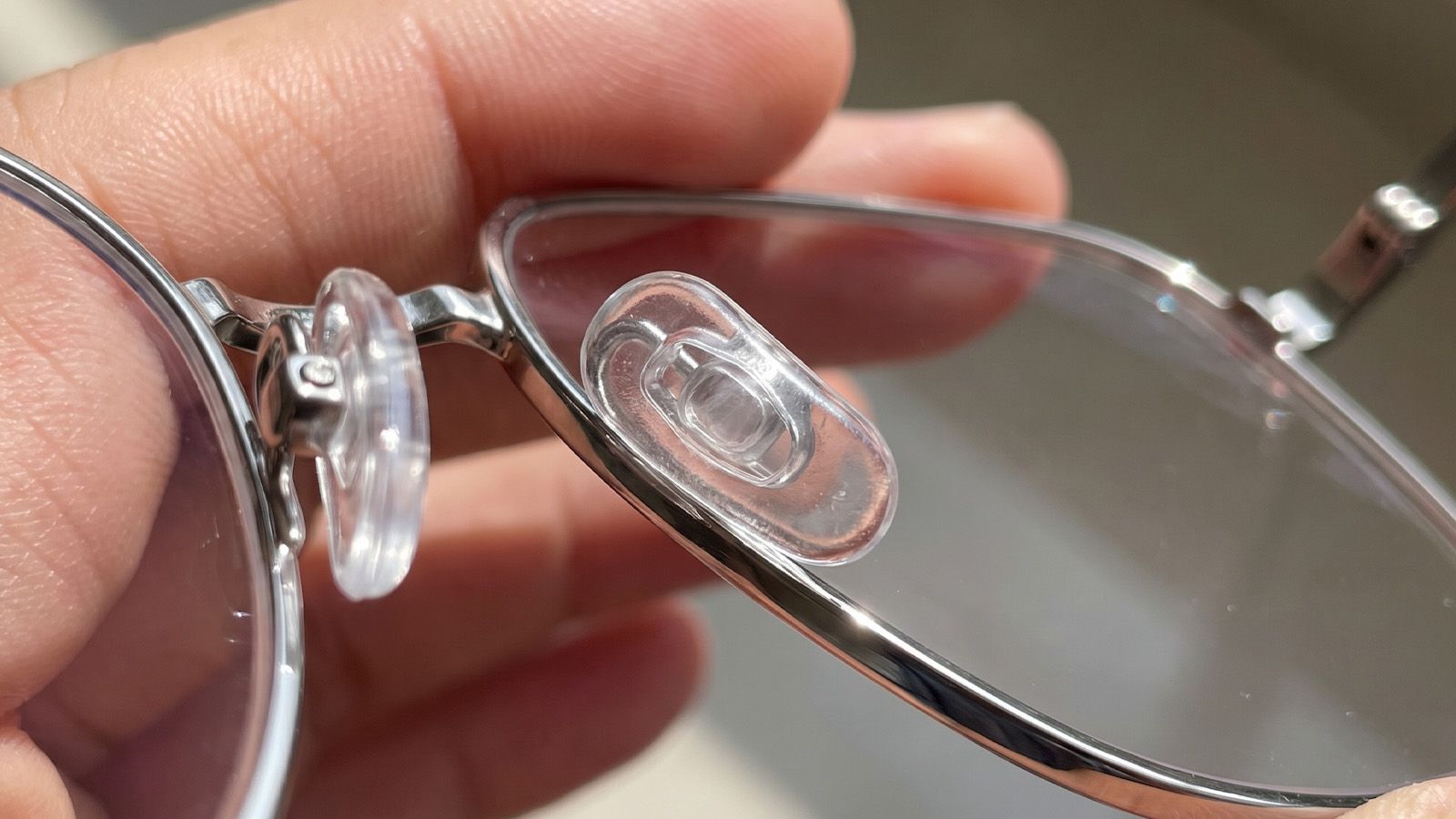
How to Replace Screw-In Nose Pads
- Place the glasses on a soft cloth with the lenses protected.
- Use a precision screwdriver that fits the tiny pad screw.
- Hold the pad arm gently so it does not bend while loosening the screw.
- Remove the old pad, place the new pad in the same position, and tighten the screw until snug.
- Repeat on the other side and check that the glasses sit level.
Do not over-tighten the screw. If the pad arm is bent, loose, or cracked, a professional adjustment is safer than forcing the part at home.
Other Useful Eyewear Accessories
Nose pads are only one part of comfort. If you are shopping for glasses accessories, start with the part that matches the problem. Temple tips can reduce ear pressure, anti-slip straps can help during active use, spectacle chains can keep reading glasses close at hand, and a basic repair kit can fix loose hinge screws or missing nose-pad screws before the frame becomes unstable. Eyeglass frames with spring hinges and spring hinge eyeglasses can also improve everyday flexibility, but the hinge still needs to match the frame design and should not be forced.
Queries like kit to repair glasses, glasses fixing kit, eyeglass screw kit, eyeglasses fixing kit, screwdriver for spectacles, spectacle cleaning kit, case for glasses, chain for glasses, glasses necklace, eyeglass lanyards, glasses storage, and glasses case usually point to small maintenance items rather than a new frame. Keep a repair kit for loose screws, a hard case or organizer for storage, a microfiber cloth for cleaning, and a lightweight chain only if it will not pull on delicate temple arms.
Glasses legs, glasses hinge, and eyeglass hinges are common shorthand for the temple arms and hinge joints. If those parts feel loose, check the screw first; if the hinge is bent or cracked, replace the frame or ask for professional repair instead of forcing it.
Glasses ear hooks, eyeglass ear hooks, spectacle ear grips, rubber glasses grips, and anti-slip glasses ear hooks are used when the temples slide or rub behind the ears. Match the hook or grip size to the temple width, avoid heavy accessories on delicate frames, and remove any add-on that creates pressure after a few hours of wear.
| Accessory | Problem it solves |
|---|---|
| Temple tips | Pressure or slipping behind the ears |
| Spectacle chain | Keeping glasses nearby during on-and-off use |
| Repair kit | Loose hinge screws and lost nose-pad screws |
| Hard case | Crushing and scratches during travel |
| Microfiber cloth | Safer daily lens cleaning |
| Retainer strap | Movement during sports, outdoor work, or travel |
Where to Browse Next
If nose bridge fit is your main concern, read the high bridge vs low bridge guide. If you want frames with a slimmer profile and adjustable pads, compare lightweight glasses, rectangle glasses, and browline glasses.
FAQ
Are glasses with nose pads better?
They can be better if you need more adjustability. Nose pads are especially useful when a fixed plastic bridge slides, pinches, or touches the cheeks.
How often should nose pads be replaced?
Replace them when they yellow, harden, loosen, crack, or stop gripping. Silicone pads often need replacement sooner than hard plastic pads because they are softer.
Can I add nose pads to plastic glasses?
Sometimes. Adhesive stick-on pads can add lift or grip to some plastic frames, but they are not as precise as built-in adjustable pad arms.
What are the arms of glasses called?
The side pieces are usually called temple arms or temples. The softer end sections that rest behind the ears are often called temple tips.
What is the bridge of glasses?
The bridge is the part between the lenses that sits over the nose. Bridge width and bridge shape affect whether glasses pinch, slide, or sit too low.
Why do my glasses leave marks on my nose?
The frame may be too heavy, the pads may be too small or hard, or the bridge may not match your nose shape. Wider silicone or air cushion pads can reduce pressure for some wearers.
Conclusion
Before replacing a pair of glasses, check the small fit parts first. Nose pads, temple tips, screws, and basic cleaning tools are inexpensive, practical, and often enough to make daily eyewear feel more stable and comfortable.