Buying glasses online is easiest when you separate the decision into three parts: vision needs, frame fit, and style. A good pair should support your prescription, sit comfortably on your face, and match the way you want the frame to look in everyday settings.
This guide covers how to buy eyeglasses online, how to use virtual try-on, how to compare frame measurements, and how to use face-shape guidance without turning it into a rigid rule.
Start with prescription and PD
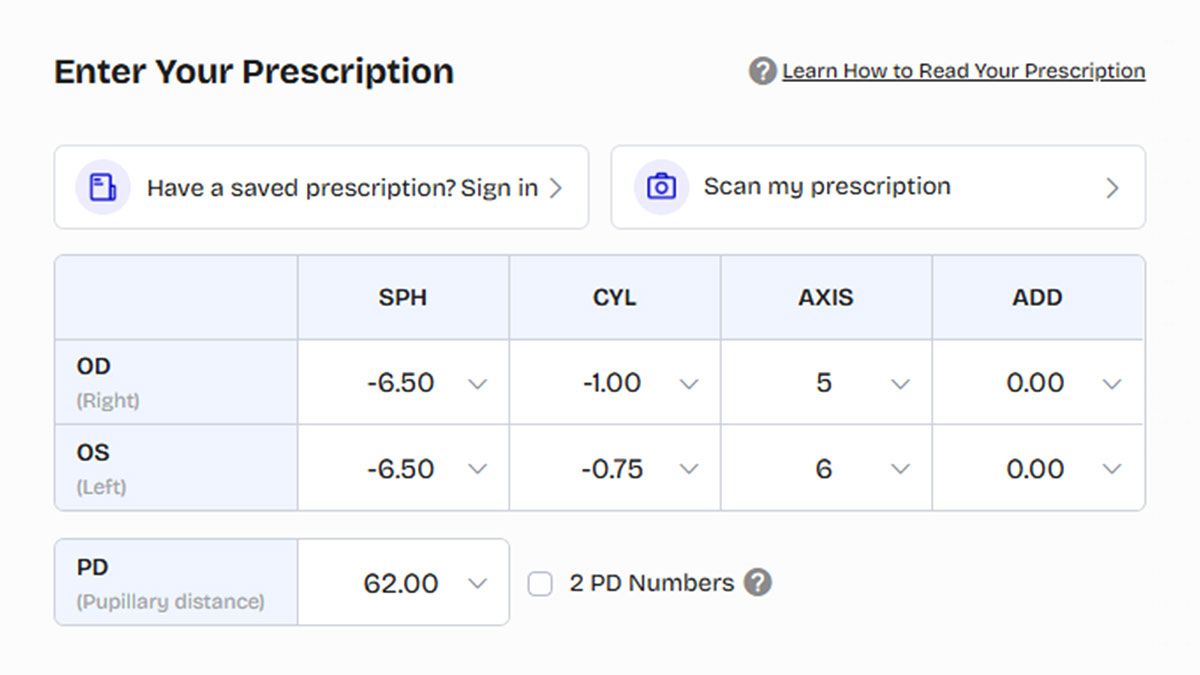
Your prescription may include SPH, CYL, Axis, ADD, prism, and PD. SPH describes the main distance or near correction. CYL and Axis relate to astigmatism. ADD is commonly used for near vision in multifocal or reading needs. PD, or pupillary distance, helps place the optical center of the lenses correctly.
If your prescription is missing PD, use a careful measurement method before ordering. If any prescription value is unclear, confirm it with your eye-care professional instead of guessing.
Choose glasses by face shape
Face shape does not decide the only frame you can wear, but it helps you understand balance. Most people are between shapes, so use these notes as a starting point and then confirm with frame measurements and virtual try-on.
| Face shape search | Frame direction to try | Why it works |
|---|---|---|
| Glasses for round or chubby face | Rectangle, square, browline, or geometric frames | Angular lines add structure and can make the face look longer |
| Glasses for long faces | Deeper lenses, square frames, browline, or balanced oversized shapes | More lens height can reduce the appearance of extra face length |
| Glasses for long narrow face | Medium-to-wide frames with enough vertical depth | Extra width and depth help the frame look proportional |
| Oblong face glasses | Square, aviator-inspired, browline, or deeper rectangle frames | These shapes add visual width and break up vertical length |
| Triangle face glasses | Browline, cat-eye, aviator-inspired, or frames with stronger upper rims | Upper-frame weight balances a wider jaw and narrower forehead |
| Square face glasses | Round, oval, or softer-edged frames | Curves soften a strong jawline and angular features |
| Oval face glasses | Most balanced frame shapes | Oval faces usually have flexible proportions |
| Heart or diamond face glasses | Lightweight frames, cat-eye, oval, or softer lower rims | These can balance cheekbones, forehead width, or a narrower chin |
Glasses for diamond face shapes
A diamond face shape usually has more visible cheekbone width with a narrower forehead and chin. The most useful glasses for a diamond face shape often soften the cheekbone area while adding balance near the brow line. Cat-eye glasses, oval glasses, browline frames, lightweight round frames, and softer geometric shapes are practical starting points.
Avoid treating diamond face glasses as a single fixed style. Frame width, bridge fit, lens height, and how the top rim sits against your brows matter more than the label. Use virtual try-on to compare lifted cat-eye frames, lighter lower-rim styles, and rounded shapes before ordering.
Heart shaped face glasses
A heart shaped face usually has more width around the forehead and a narrower chin. The best glasses for a heart shaped face often balance the upper face without adding too much visual weight at the brow. Oval frames, round frames, lighter rectangle frames, and softer cat-eye shapes are useful starting points.
Do not confuse heart shaped face glasses with novelty heart-shaped glasses. For everyday prescription eyewear, the goal is fit and balance: comfortable bridge support, a frame width close to your face, and enough lens height for the lens type you need.
Frame measurements matter more than labels
Face-shape advice works only when the frame is the right size. Check lens width, bridge width, and temple length on your current glasses if you own a comfortable pair. A frame that is too narrow can pinch and make the face look wider. A frame that is too wide can slide and feel unstable.
For chubby face glasses or fat face eyeglasses, avoid choosing a tiny frame just because it looks subtle on the product photo. For long face glasses, avoid very shallow lenses if they make the face look longer. For triangle and oblong face shapes, compare the frame width against cheekbone and jaw width before ordering.
What the numbers on glasses frames mean
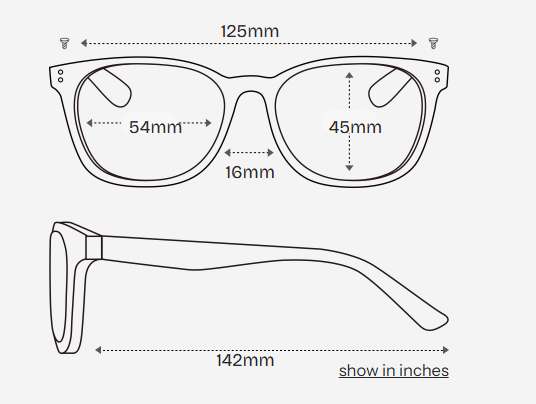
Most eyeglass frames use three measurements in millimeters: lens width, bridge width, and temple length. A marking such as 52-16-140 usually means a 52 mm lens width, a 16 mm bridge, and a 140 mm temple length. Some frames show only two numbers, such as 52-16, on the inside of the temple arm or bridge.
| Frame number | Meaning | Why it matters |
|---|---|---|
| Lens width | Width of one lens | Affects overall frame width and lens thickness |
| Bridge width | Distance between lenses over the nose | Helps prevent sliding or pinching |
| Temple length | Length of each arm | Affects how the frame rests behind the ears |
| Frame width | Total front width | Helps match narrow, medium, wide, or oversized fit |
When comparing frame size online, use a pair you already like as the reference. Match the total width first, then check bridge width and lens height. This is more reliable than choosing by face shape alone.
How virtual try-on helps
Virtual try-on can help you compare shape, color, and scale before ordering glasses online. It is most useful for seeing whether rectangle, round, cat-eye, browline, clear, tortoise, or bold color frames match your face. It does not replace measurements, but it helps reduce uncertainty when two frames have similar sizes.
For best try-on results, use even lighting, face the camera straight on, and compare several frames from the same size range. If a virtual try-on frame looks too wide, check the listed frame width before assuming the shape is wrong.
Pick lens options after the frame is right
Lens options should match how you use your glasses. Single-vision lenses work for one field of vision. Progressive lenses cover near, intermediate, and distance in one lens. Blue light options are common for screen routines. Anti-reflective coating can reduce lens-surface reflections. Photochromic lenses darken outdoors and clear indoors, depending on the lens package.
If you are choosing glasses for night driving, start with an accurate distance prescription and consider anti-reflective coating before thinking about tint. If you need reading correction, compare reading glasses and progressive lenses before assuming one pair fits every task.
Where to browse next
Start with all glasses, then narrow by shape: rectangle glasses, square glasses, round glasses, or browline glasses. For fit details, read the high bridge vs low bridge guide. For prescription entry, use the prescription guide.
FAQ
What glasses are best for a long face?
Long and oblong faces often work well with frames that have enough lens height and visual width, such as square, browline, deeper rectangle, or moderate oversized shapes. Very narrow, shallow frames can make the face look longer.
What glasses look good on a chubby face?
Rectangle, square, browline, and geometric frames are useful starting points because they add structure. The frame should be wide enough for your face and not sit too small in the center.
What glasses suit a triangular face shape?
Triangle face shapes often benefit from frames with more visual weight near the brow, such as browline, cat-eye, or aviator-inspired shapes. The goal is to balance a stronger jaw with the upper part of the face.
What glasses suit a heart shaped face?
Heart shaped faces often work well with oval, round, lighter rectangle, or softer cat-eye frames. Avoid choosing a very heavy top rim only because it is trendy; check whether it balances the forehead and chin on your own face.
Can I buy glasses online if I do not know my face shape?
Yes. Face shape is helpful, but frame measurements, bridge fit, and virtual try-on are usually more practical. Start with a comfortable size range and then compare shapes.
What does 52-16 mean on glasses?
It usually means 52 mm lens width and 16 mm bridge width. A third number, if shown, is usually temple length.
Is virtual try-on enough to choose glasses online?
Virtual try-on is useful for style and scale, but you should still check lens width, bridge width, temple length, and prescription compatibility before ordering.
Conclusion
Buying glasses online is not just about finding a style name. Use prescription and PD for accuracy, measurements for comfort, and face shape for visual balance. Once those basics are clear, choosing between colors, materials, and lens options becomes much simpler.