Prescription glasses are made based on measurements like pupillary distance (PD). If you go to an eye doctor and get a prescription, they will make it just right for your eyes. These glasses may help people who are nearsighted, farsighted, astigmatic, or presbyopic see better. Not only are they useful, but they also look good with everyday clothes. For people who have trouble seeing, prescription glasses are carefully made to help.

What kinds of lenses are there for prescription glasses?
The lenses in prescription glasses may be different for each person who wears them. Most people like the following types:
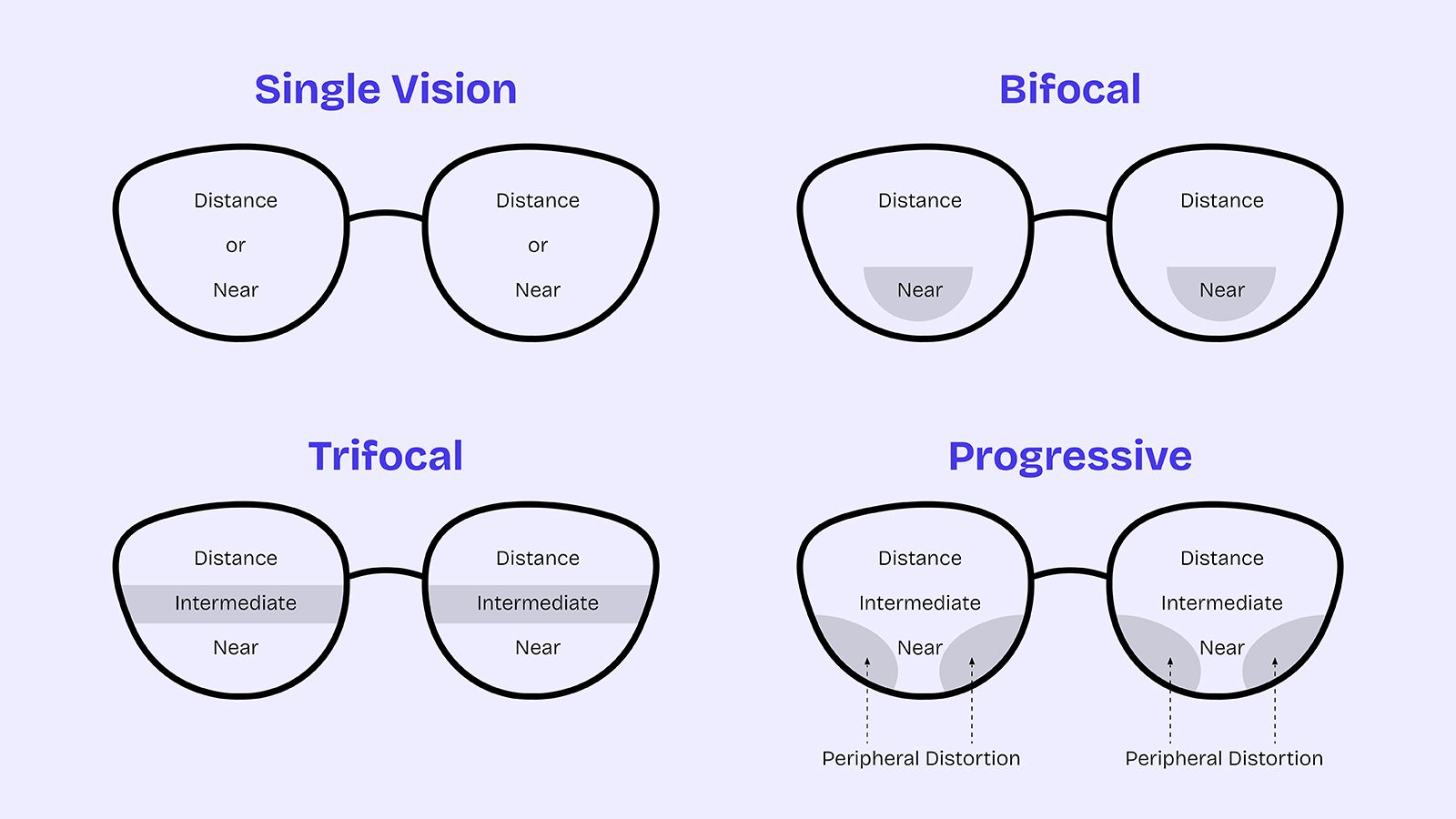
Single-vision lenses
They work best for people who only have one vision problem, like myopia or hyperopia, which is nearsightedness or farsightedness. These single-vision lenses glasses only fix your vision in one area, like up close, far away, or in the middle.
Bifocal Lenses
Between the two fields of view, you can see a line. They help people with presbyopia who are older the most. The one lens that lets you see better up close and far is called a bifocal lens.
Progressive lenses
They make watching feel more natural and make the screen look sleek and up-to-date. Progressive lenses glasses are also known as "no-line bifocals" and let you gradually change your near, intermediate, and farsightedness.
Blue light-blocking lenses
Plus, they block the bad blue light that electronics give off, so your eyes don't get tired and stressed after using a computer for a long time. In practice, more and more people are using these blue light-blocking glasses because they help their eyes see better.
Photochromic lenses
They are darker outside and lighter inside. They are handy, and you don't have to carry around extra shades because they block UV rays. These photochromic lenses glasses change color based on the light.
Antireflective lenses
Plus, they help your eyes see better in general. These lenses block out glare from light sources, so they're well suited to working in bright light or driving at night.
Prescription glasses vs. Non-prescription glasses
Glasses with a prescription
Prescription glasses are made just for you to fix certain vision problems, and you need a specific prescription from an eye doctor to get them.
In practice, important for people who have trouble seeing clearly.
Non-Prescription Glasses
These glasses are mostly worn for style or safety.
Shades or glasses that block blue light and don't change your vision are good for people with normal eyesight.
Reading glasses vs. Prescription glasses
Reading glasses
Most of the time, you don't need a prescription to buy them. They aren't made to fit your eyesight needs, so they aren't as exact. Reading glasses help you see things up close, like when you read or do crafts.
Prescription glasses
After a professional eye exam, you can get lenses that are made just for you. In practice, astigmatism and farsightedness can both be fixed with prescription glasses.
How do I get glasses written out for me?
To get a prescription, just follow these simple steps:
1. Set up a time to get your eyes checked. See an eye doctor or optometrist for a full checkup.
2. Talk about having trouble seeing. Write down any signs you might have, like difficulty seeing or tired eyes.
3. Sign up for your medicine: After testing you, your doctor will write you a prescription that tells you how much power you need for each eye.
4. Choose your glasses and frames. Find the best glasses for your needs and style by using your prescription.
Conclusion
Know the pros and cons of the different lens options and prescription vs. Non-prescription glasses to make an informed choice. By going to SatisVision, you can find a lot of stylish and reasonably priced glasses that meet your needs. People who have trouble seeing need glasses that are prescribed to help them see well and easily.