Unlike your SPH (Sphere) which tells you how strong your lenses are, the Axis often feels like a secret code. Does a 180 means you are blind? Or is it just the thickness of the glass? Have you ever squinted at your eye prescription and wondered about that mysterious ""Axis"" number?
It acts like a compass for your lenses, ensuring the correction sits exactly where your eye needs it. Let's pull back the curtain on this 180-degree scale. In reality, if you have astigmatism, the Axis is the most critical detail for your visual comfort.
What Is the Axis on a Glasses Eye Prescription?
Quick Summary: On an eye prescription, the Axis is a critical coordinate (ranging from 1° to 180° ) that determines the orientation of astigmatism correction. It works exclusively with the Cylinder (CYL) value to align lenses with the irregular " football-shaped " curvature of the cornea. While 90° indicates vertical and 180° horizontal orientation, the Axis measures direction, not vision severity. Precise alignment is essential; even a 5-degree error can lead to eye strain, headaches, and blurred vision, making professional optometrist validation vital for clear sight.
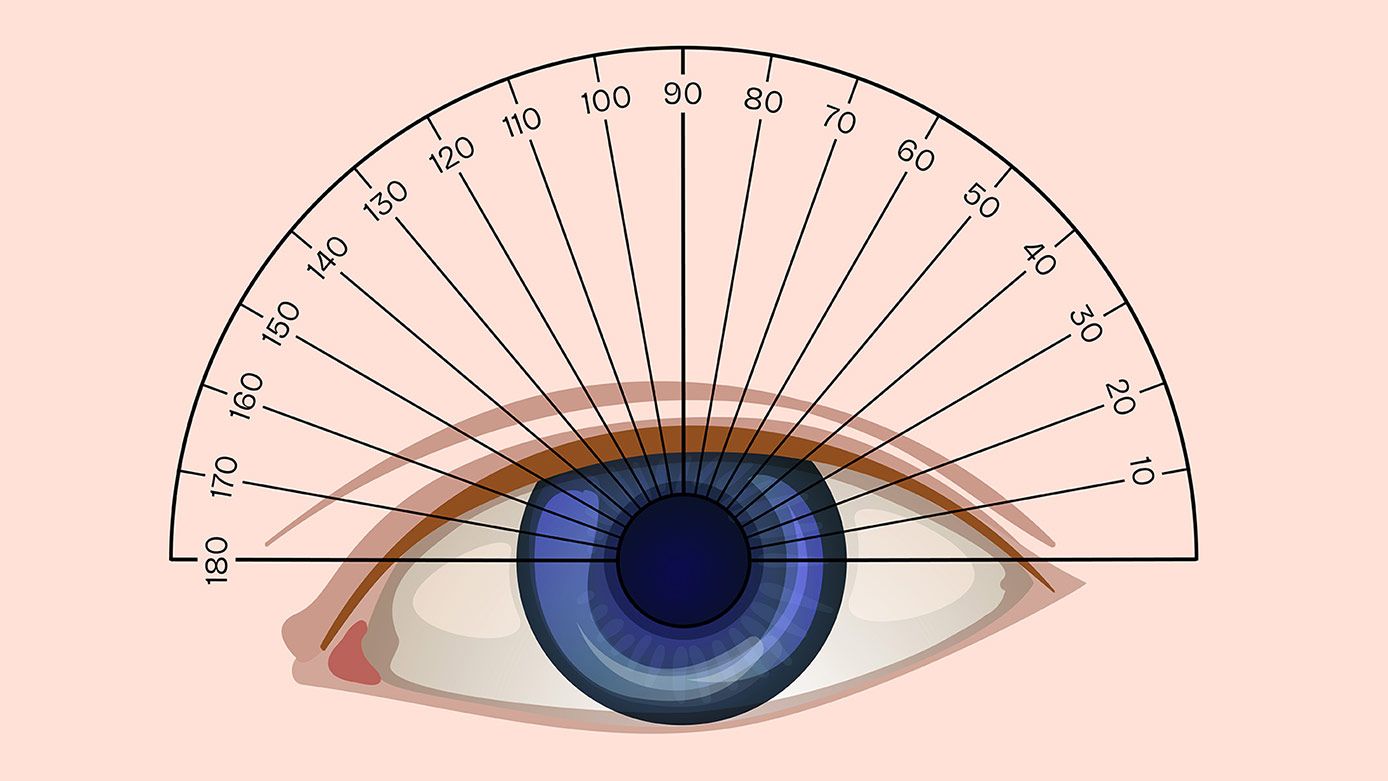
Simply put, if the Cylinder (CYL) tells us how much astigmatism you have, the Axis tells us where it is.
The axis indicates which direction that football is tilted. Imagine your eye is meant to be round like a basketball, but instead, it is shaped like a football.
| Axis Value | Orientation | Description |
|---|---|---|
| 90° | Vertical | Correction is applied straight up and down. |
| 180° | Horizontal | Correction is applied left to right. |
| 45° / 135° | Diagonal | Correction is applied at an incline. |
Instant V and Eye Transparent Contact Lenses
Simply put, the axis is a number (between 1° and 180°) that specifies the orientation of the astigmatism correction in your glasses. So, what is the Axis?
The cylinder tells us how much astigmatism you have, while the axis indicates where the astigmatism occurs in your eye. If you have astigmatism, your eye prescription will have both a CYL (cylinder) value and also an axis value.
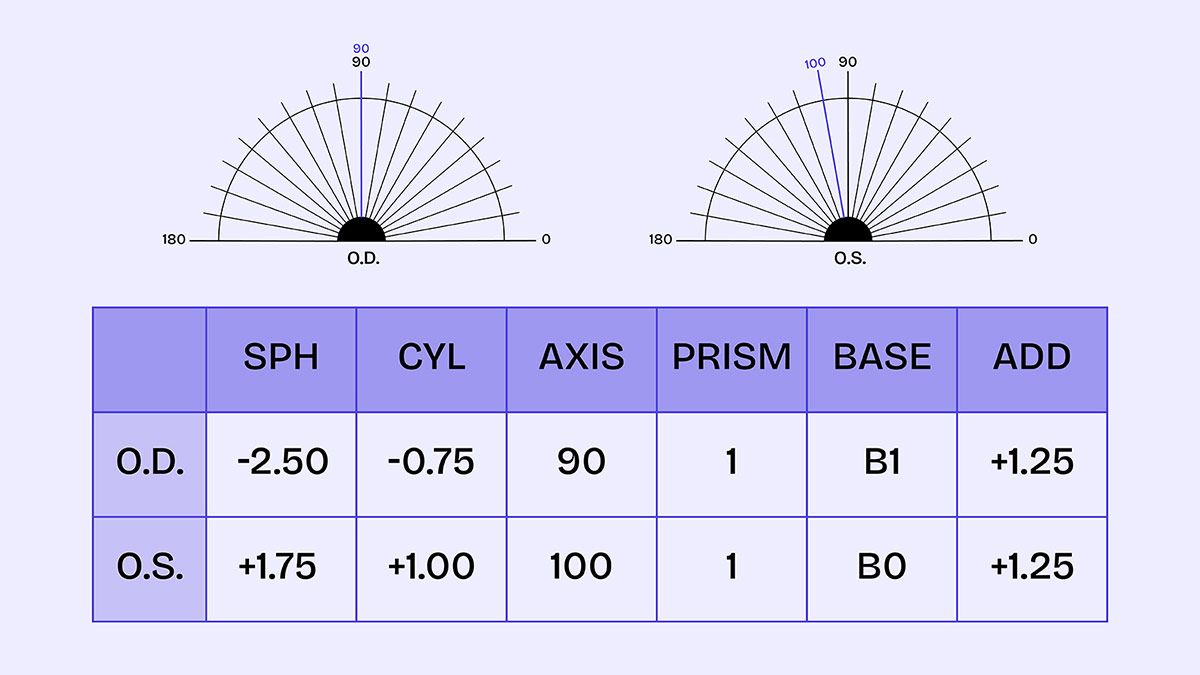
It is more of a football shape than a basketball shape. That shape means that light focuses unevenly on the retina, resulting in blurry or distorted vision. The axis indicates which direction that “football shape” is tilted and how the lens needs to be oriented to correct it. Imagine your eye is a perfect sphere but in astigmatism, it is not.
In short:
CYL = the strength of correction necessary
Axis = correction angle / direction
If the angle’s wrong, even a bit, your vision may be off. It is akin to refocusing a camera lens to clarify everything in the frame.
When Does an Axis Value Appear on Your Prescription?
One question many people have is, “Why does not everybody have an axis number on their prescription?”
Let’s explain. The axis only comes into play when the astigmatism is also present.
It is not exactly round; it is more curved in one direction than the other, like an oval. This means light is projected to several points in the eye, rather than converging to one sharp spot. If you have astigmatism, the clear front surface of your eye (the cornea) is uneven in shape.
To fix this, your prescription should say:
In practice, cYL (Cylinder), amount of power required to correct an uneven curvature
In practice, axis, a kind of point about which or direction for this correction
No cylinder means you don’t need astigmatism correction, so no direction to worry about. So if you don’t have a cylinder value in your prescription, you will not have an axis number in your prescription either.
If you don’t have this, your glasses will not know how to correct your astigmatism the right way. In practice, however, in the presence of Cylinder, Axis is key.
In short:
No Cylinder = No Axis
Astigmatism present = CYL + axis required.
How to Interpret Axis Values?
So now you know Axis and why it shows up; let’s understand what the actual number is doing.
The axis is always between 1° and 180°, and it tells the orientation of your astigmatism correction on a 180-degree circle (like a protractor).
Here’s a breakdown:
- 90° means the compensation is vertical (straight up and down).
- 180° means the correction is lateral (left or right).
- 45° or 135° indicates the correction in this case is diagonal.
It matters to note:
In practice, the axis does not factor in how severe your astigmatism is, only its direction.
Let’s take a few examples:
- CYL: -1.25, Axis: 90° → Your lens is correcting a vertical astigmatism.
- CYL: -0.75, Axis: 180° → The correction has to be horizontal.
- CYL: -2.00, Axis: 45° → Need 45° incline correction
This precision helps bend light correctly over onto your retina so that you can see clearly. The optician uses these measurements to grind the lenses to precisely the shape and curvature of your eye.
Does the Axis Value Affect How Your Glasses Feel?
Now you might ask, “If axis is just an angle, does it really matter that much?
Axis does not alter how your glasses look to anyone else, but it can have a profound impact on how you feel wearing them. The answer is a resolute yes.
Inaccuracies at Axis errors as low as a few degrees can lead to:
- Blurred or distorted vision
- Eye strain
- Frequent headaches
- Headaches or nausea (for some)
It is like trying to peer through a magnifying glass held at the wrong angle. That’s due to the lens correction, which isn’t calibrated to the true shape of your cornea.
Online vision tools and DIY apps often cannot accurately measure astigmatism. Always have a certified optometrist or ophthalmologist test and write the proper values. In practice, this is why it is so crucial to get an eye prescription done for you!
It may be an axis problem, and having it double-checked could improve your visual comfort immensely. In practice, if you notice your glasses feel “off,” don’t ignore it.
FAQs
Q: Can my Axis number change over time?
Because even a minor shift in astigmatism orientation requires a corresponding adjustment in your prescription, regular eye exams every 1-2 years are essential to ensure your lenses remain accurately aligned with your current corneal curvature. In practice, a: Yes, your Axis number can change as your eye’s corneal shape evolves due to age, healing, or underlying vision shifts.
Q: What are the symptoms of an incorrect Axis on a prescription?
Since the Axis determines the exact angle where light focuses on the retina, a deviation of even a few degrees causes the brain to struggle with misaligned images, often leading to visual fatigue and, in some cases, nausea. A: An incorrect Axis value typically results in blurred or distorted vision, persistent eye strain, and frequent headaches.
Q: Is it common to have a different Axis value for each eye?
Because each eye is shaped uniquely, one eye may have a vertical astigmatism (e.g., 90°) while the other has a diagonal orientation (e.g., 160°). Your prescription must provide separate measurements for each eye to ensure balanced and clear binocular vision. A: Yes, it is very common for the Axis values to differ between the left (OS) and right (OD) eyes.
Q: Can I wear non-prescription sunglasses if I have an Axis value?
For mild astigmatism (CYL below -0.75), non-prescription sunglasses may be tolerable for short-term use, but prescription sunglasses incorporating your CYL and Axis values remain the recommended option for sustained visual clarity and comfort. In practice, a: If your Axis value accompanies a significant CYL (typically -1.00 or higher), non-prescription sunglasses will not correct your astigmatism and may cause visual discomfort during extended wear.
Q: What does it mean if my Axis is 180?
It does not indicate a severe or unusual prescription. 180° is one of the most common Axis values, often associated with "with-the-rule" astigmatism, particularly in younger patients. The number 180 refers only to orientation on a 180-degree scale, not to any measure of vision severity. In practice, a: An Axis of 180° means your astigmatism correction is oriented horizontally—the lens needs to apply its corrective power along the left-to-right direction of your eye.
Q: Do I need to tell my optician my Axis number when ordering glasses online?
When ordering prescription glasses online, you must enter your Axis value exactly as written on your prescription—including whether it differs between your left (OS) and right (OD) eye. Even a minor transcription error can result in lenses that feel uncomfortable or cause visual distortion. Your prescription card or digital prescription from your optometrist will list the Axis under each eye's column, typically alongside the CYL value. A: Yes.
Summary: Why Getting Your Axis Right Matters
But in those with astigmatism, the axis is critical as well. Even with the best lenses, without the right axis, you may not have clarity of vision. Most people look at their prescription and hone in on the SPH (sphere) number and think that’s all there is.
Knowing your prescription even a little may help you:
Purchase accurate glasses.
Identify errors in prescriptions. In practice, communicate clearly with your eye doctor.
Feel more confident when buying eyewear online.
This helps make sure your lenses are made specifically to your vision needs. Numbers on a prescription need not intimidate you, least of all the Axis. It is a small number but one that often dictates how clear and comfortable your view ends up being of the world. In practice, with tools like the SatisVision eyewear Eye Prescription Guide, filling in your Axis, CYL, and other values when ordering new glasses is a breeze.
Finding Your Perfect Fit at SatisVision
With tools like the SatisVision Eye Prescription Guide, ordering your next pair of high-quality, prescription-corrected lenses is a breeze. Your vision deserves to be understood—and perfectly corrected. In practice, understanding your prescription reduces the guesswork when selecting eyewear.